TL; DR: AI search is nothing special, although it’s got some cool benefits. Optimizing your content for it follows traditional practices with some extra sauce.
So, you spy a LinkedIn post that’s interesting. Just as you’re going to leave a comment, you remember that you had an opinion about it that was longer than a few hundred characters. In this episode, it’s AI search. Specifically, why your potential customers (and you!) might use it and what it means for getting eyes on your products and services.
As with many of these ‘pontifications’, I’m going to tell you a little story before getting into the bulk. Sit back, grab your Eagles vinyl, your Rockford Files box set, and a Kia-Ora (if you’re in the UK) or a Surge maybe if you’re elsewhere.
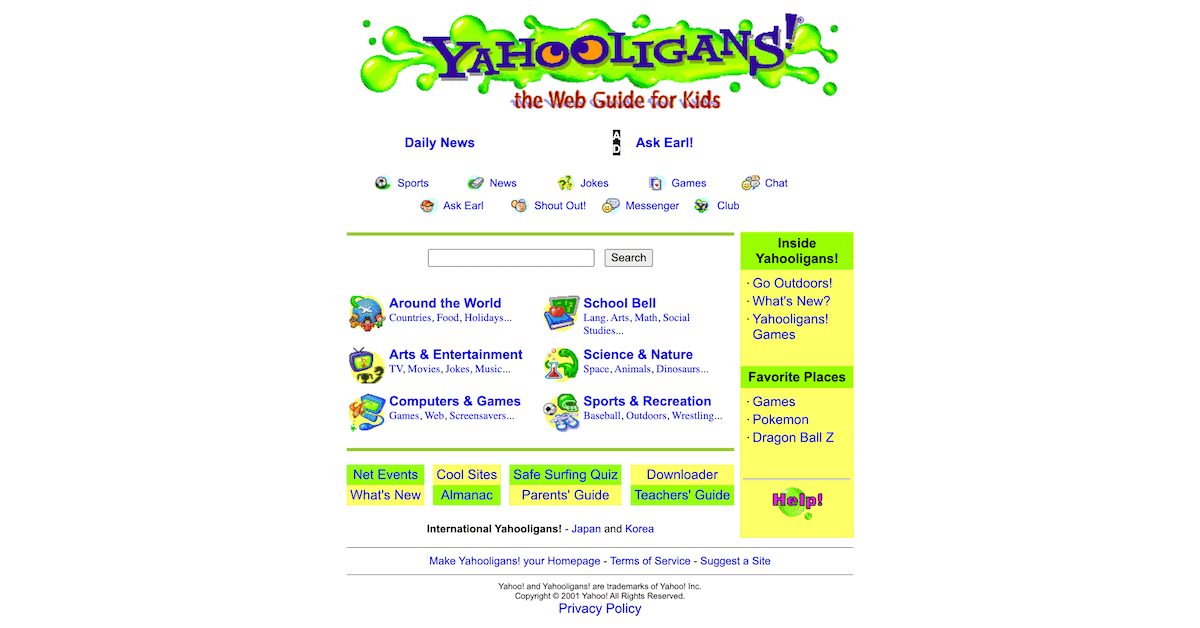
‘Dad Search’: Yahoo, Ask Jeeves, and Crippling Browser Resources
I’m *ahem* pre-Google old. The first search engine I used was AltaVista because it indexed the most number of web pages (or ‘documents’) at 16 million. Yes, this is just like your grandad telling you that the autotramulator to the Lindy Hop jamboree used to be a penny to ride.

Anyway, AltaVista didn’t do everything when it came to search. In fact, you could (wrongly) argue that it did not enough of anything because it was shuttered eight years after it launched. However, there was one thing it definitely didn’t do that the current search tech does very well: curate and collate.
For this, I would have to turn to Dogpile, which was a ‘metasearch’ engine:
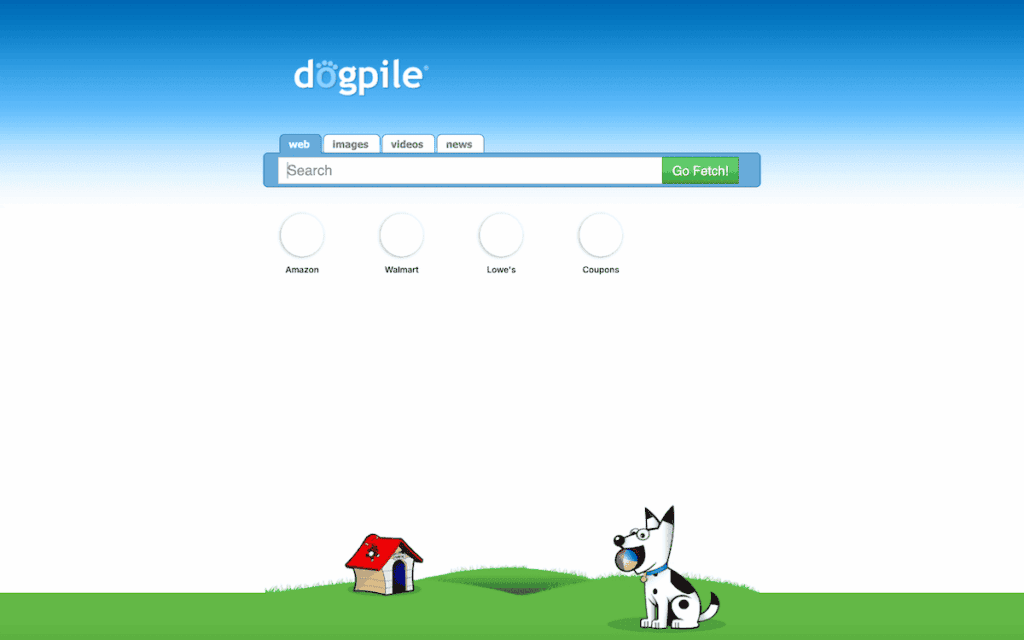
Instead of looking within its own index of sites and nowhere else, it took the results of lots of other indices and returned them to you. For specific search topics, I would get a literal better return using Dogpile because it would show me the best results from a bunch of other search engines rather than the top ten from 16 million.
You might already be seeing how this tidbit correlates to search in 2026 rather than 1826.
How I run a search query as a consumer
My typical non-AI approach to getting the information I need is best described with an example. Let’s say I want to cook up a mean vegan, five bean chilli. I do this often, but humour me while I outline the steps I’d take:
- First, I’ll fire up a typical engine.
- Then, I’ll open up as many of the results on the first two pages that are relevant and interesting to me, without frying up my CPU and RAM (because RAM is expensive now).
- Next, I’ll read through those tabs and cherry pick the information that fits what I need. So it could be ingredients that compliment each other from different recipes, or a different cooking order.
Finally, I’d jot it all down to put together the definitive, Gordon Ramsey-shushing chilli recipe. Maybe it says more about me, but I quite enjoy this approach. It feels creative, motivating, and fulfilling. I’m never going to leave it behind because there’s a place for this level of depth, as you’ll discover.
What AI search achieves
In general, I’m a fan of AI search and there is a definite benefit to using LLMs as search engines. It can (in theory) replace some aspects of the typical search workflow. Of course, this contextual framing is the biggest evolution in search tech because of the conversation you have with the bot. In practice, this works in a similar fashion to giving a typical search engine a weird keyword to find just the right result.
For instance, it might surprise you to know that an LLM’s approach to fetching from the web is essentially the same as the typical ‘manual’ steps: Take the prompt query, open up all the tabs on the first results page, and give you the summary in a conversational tone while talking about being “absolutely right” and how the “crucial landscape” of your topic is being “woven into a tapestry”.
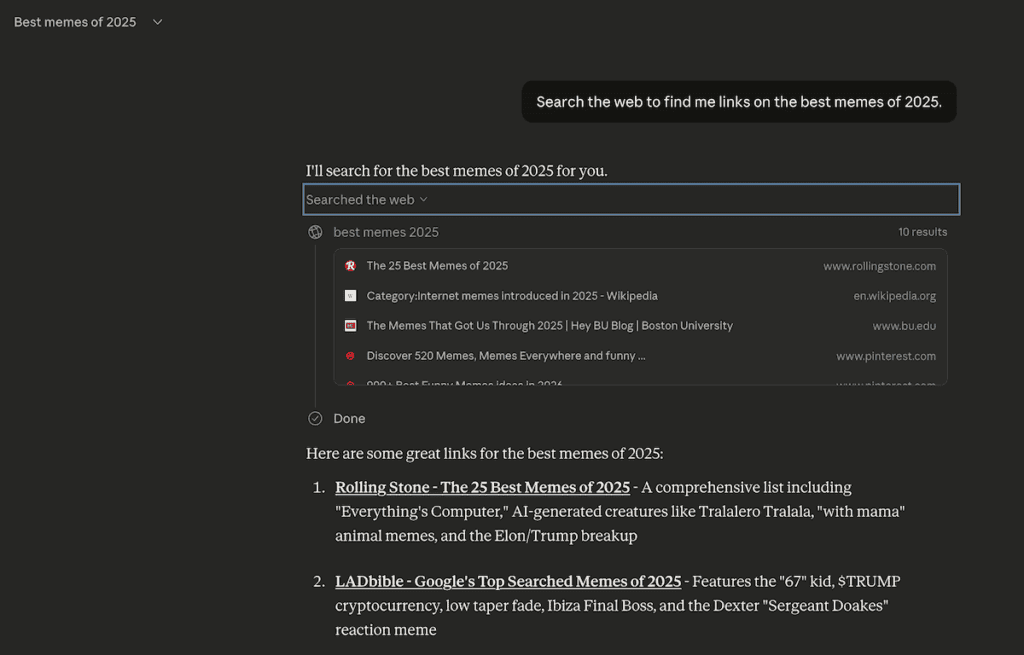
Claude uses Brave Search so you can run the same query there and see how closely the results correlate:
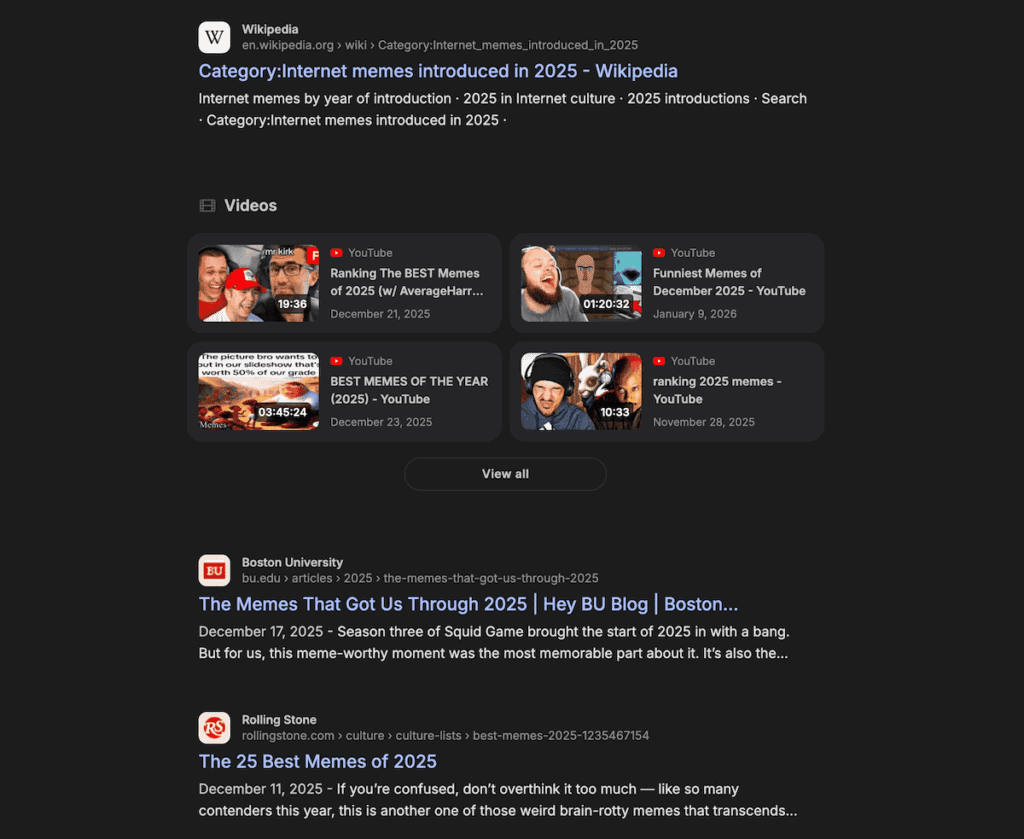
Mikhail Shilkov has a good breakdown of how Claude Code fetches from the web, if you need more information. However, you can tell that it’s literally the LLM creating a keyword from your prompt’s context and pulling results from the same web pages you’d typically access.
The big drawback to this is clear: regardless of the search method, if you don’t get your keyword or phrase correct, you get sub-optimal results. However, you’re giving the LLM control over what keyword you search for here, which can mean more work in getting the results you want.
Why LLMs and AI search doesn’t have the research chops
I’m not a premium ChatGPT user any more, although Claude Pro has dedicated research functionality that is essentially the same as my typical steps, but ‘deluxe’: as far as I can tell, this time it opens up all the tabs on the first few results pages, then scrapes other sites such as Reddit and TikTok to curate a massive list of sources. In place of an inline response, it delivers a document that outlines the summary.
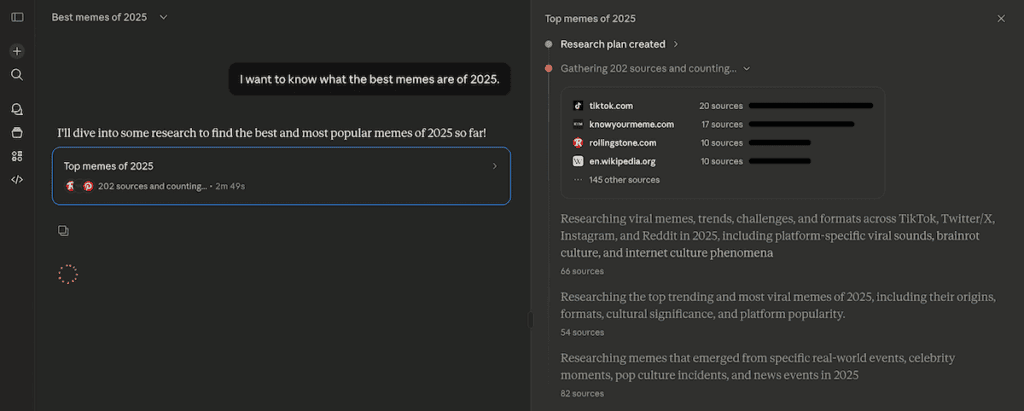
There is documentation on the Anthropic website, but it doesn’t tell me much. In fact, even the summary document you receive after the research completes isn’t something I want. After all, I’m not asking it to write a paper (I happen to be an SEO content marketer if you recall). It’s objectively terrible quality anyway:
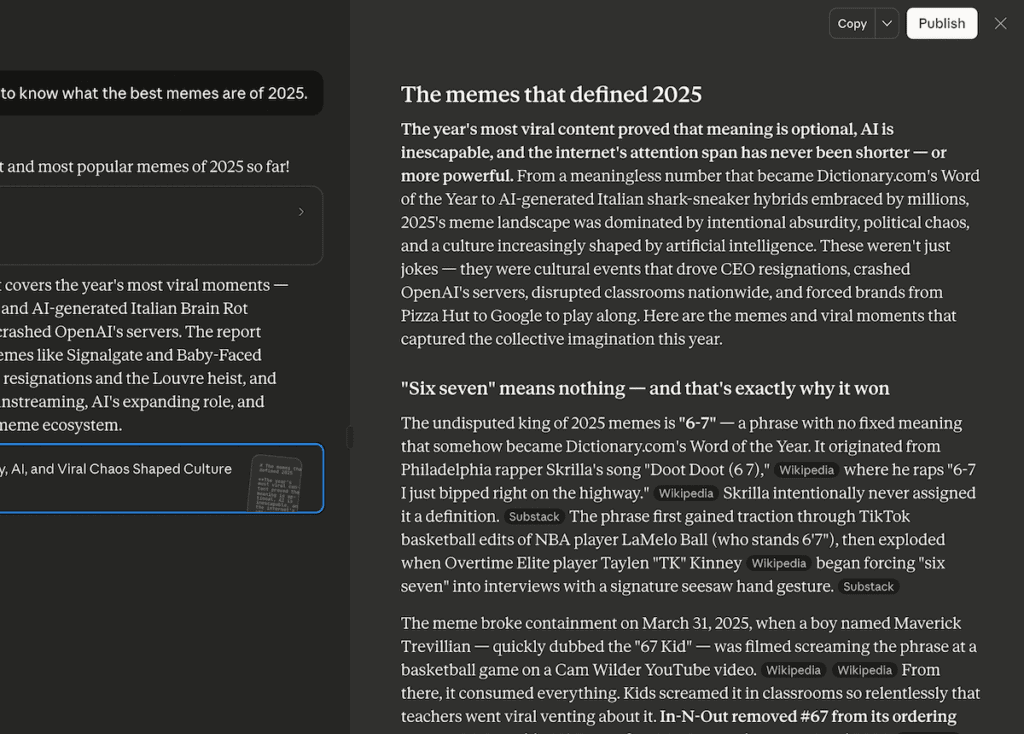
The research and basic web search functionality of LLMs are reinventing the wheel in my book. Overall, it takes more time than my own research can achieve and delivers a subpar summary. I’ve also noticed that it doesn’t always pick the best quality links.
The drawbacks of AI search
So, overall, you have slightly less control with AI search in my opinion, unless you’re being specific. For example, if we take the workflows I’ve outlined, here’s where you’re exchanging convenience for quality:
- The LLM will act upon a query of its choosing unless you tell it to search specific keywords. If you were going to do that, you’d just use a search engine directly.
- There’s no guarantee that the LLM will understand the context you need from the search results it gathers. It takes brain power to go from your head, out of your fingers, and through a prompt that’s detailed enough. Quite often, we want convenience from LLMs so you probably won’t dedicate the effort you need to the job.
- You might also get output from URLs you wouldn’t have clicked on manually, which can erode and degrade the results.
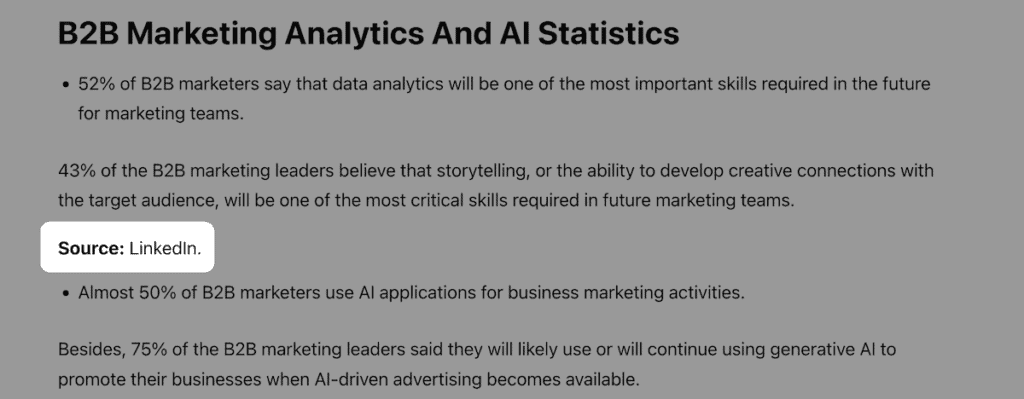
In addition to the last point, an LLM can’t ascertain between ‘slop’ pages and genuine direct sources. This is a massive problem if your research needs accuracy. For instance, I’ve had lots of times where the LLM will cite a statistic quoted from a ‘SERP top ten’ URL that is fabricated or otherwise not the direct source. Also, lots of sites seem to not link to sources, so you might get a statistic quoted from a post that you’ll never be able to verify.
There are a few more drawbacks, but you get the point. Ultimately, you’re asking the LLM to be your brain when only you can be that (Friday afternoons withstanding).
How can your business be seen in AI search results
Okay, so what does this mean for you, the business owner who needs visibility and traction from consumers? Well, for many it’s meant panic, but I’m more optimistic about it. SEOs aren’t as optimistic, granted.
So far, I can admit I might not have painted a pleasant picture of AI search: compared to typical search, it’s slower, not as accurate, and gives you a lower quality result. For you, it does seem impossible to be seen because a user can’t easily finesse the keyword to find you. However, I do use an LLM to search just as much as I use a typical search engine. This means great things for your business!
In a nutshell, reaching consumers doesn’t mean total dedication to SERPs any more, but the visibility techniques should still be your backbone. The same ways you get in front of search engine users are the same ways that ChatGPT, Claude, Perplexity, et al. will need to feature you in LLM output:
- Fundamental SEO basics are paramount, because LLMs still need to crawl content.
- Entity management is crucial and should be a massive priority. All of those featured snippets, Google MyBusiness entries, and equivalents can drip into an LLM’s corpus and give you a greater chance to be mentioned. This isn’t the only aspect of entity management though, which is why you’re likely finding it hard to get AI visibility.
However, don’t discount one other big piece of the puzzle: a near-constant updating strategy for your site and its content. AI crawlers are more frequent, aggressive, and dynamic than search crawlers. If only for that reason, you’ll want to keep turning up in the form of content updates.
The takeaway is that you should subtly shift your mindset from, “How do we get AI visibility?” to, “How can we keep showing up where our customers frequent?”. The real goal is to take AI, GEO, LLMs, etc. out of the equation and cultivate an attitude of essentially getting into your target audience’s virtual personal space.
Conclusion
The more things change, the more they stay the same. As much in the same way we’d search up Bruce Springsteen tickets on AltaVista in 1998, now we’ll ask Claude to pull up Sabrina Carpenter album reviews to create the ultimate listicle (might be just me on that one). Underneath though, the methodology to give you the results is still the same hard work it’s always been.
As it also is for your business’ visibility. Despite the marketing, AI and LLMs don’t make this easy, as you’re likely finding out. This is where an expert in content marketing can send a Dogpile to the top of the mountain. The shift and focus onto new ways to gain visibility is part of why I’ve updated this website.
If you want to build your business’ brand, grow demand, generate traffic, and work on being seen by customers, I can help. I’d love to speak with you about how we can put a plan in place to grow your visibility wherever potential customers might search for you.
